Idea Pembentukan Pemerintahan Ibn Khaldun dan Asas Pembinaan Kesultanan Melaka dari Kurun Ke-15 hingga 16
The Idea of Ibn Khaldun’s Governance, and the Base for the Construction of the Sultanate of Melaka from the 15th to 16th Centuries
DOI:
https://doi.org/10.22452/JAT.vol16no2.3Keywords:
Ibnu Khaldun, Melaka Sultanate, cycle theory, asabiyyah spirit, ‘umran conceptAbstract
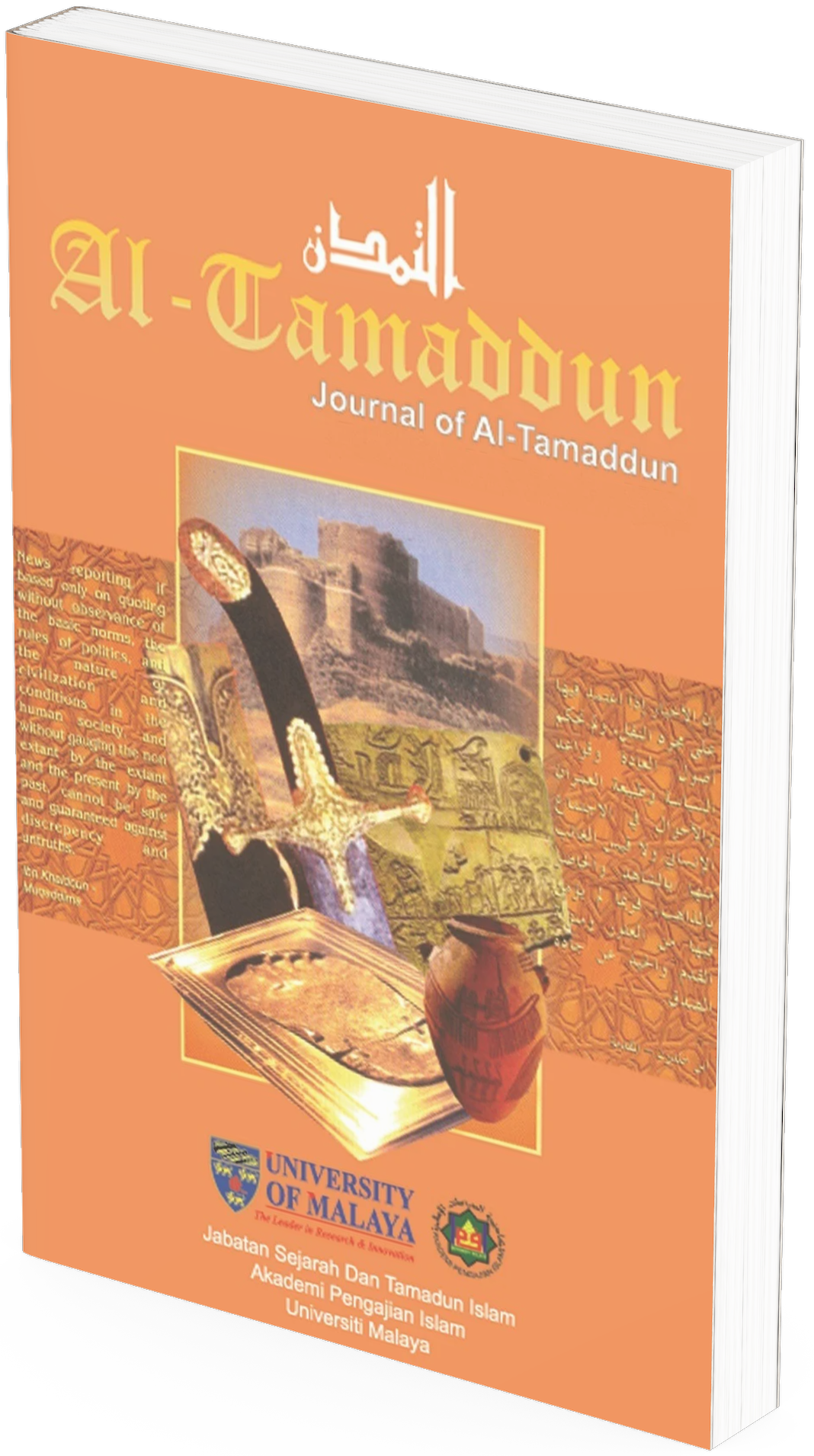
This study focuses on the idea of Ibn Khaldun’s governance by focusing on the Sultanate of Melaka in the 16th century. The primary goal of this research is to demonstrate the development of the Melaka Sultanate through the lens of cycle theory, the spirit of asabiyyah, and the concept of ‘umran as defined by Ibn Khaldun. The timeline discusses the early establishment of the Sultanate of Melaka until its fall at the start of Portuguese colonisation in 1511. The study used Muqaddimah and Sulalat us-Salatin (Sejarah Melayu) as the main source for discussion of various ideas to explain Ibn Khaldun's ideas about the reign of the Melaka sultanate from the 15th century to 16 AD. The qualitative method-guided analysis concluded that the Melaka Sultanate was built in accordance with Ibn Khaldun's theory of one-time rule. Thus, the intertextual differences employed are expected to yield an authoritative and informative argument on the relationship between Ibn Khaldun's ideas and the construction of the Melaka sultanate in the 15th to 16th centuries AD.
Additional Files
Published
Issue
Section
License
Copyright (c) 2021 Journal of Al-Tamaddun

This work is licensed under a Creative Commons Attribution-NonCommercial 4.0 International License.
By submitting manuscripts to the Journal of Al-Tamaddun, authors agree to transfer copyright to the journal. However, authors may republish their work or grant others permission to republish it; in which case it should be accompanied by a proper acknowledgment that the work was originally published in the Journal of Al-Tamaddun. The journal adopt CC-BY-NC licence which authors may also share and distribute their article anywhere of non-commercial website, social media and repositories immediately on publication.
Authors may also reuse the Abstract and Citation information (e.g. Title, Author name, Publication dates) of their article anywhere at any time including social media such as Facebook, blogs and Twitter, providing that where possible a link is included back to the article on the journal site.