NAVIGATION
Artificial Intelligence Policy
Ethics and Malpractice Statements


PAPER TEMPLATE

COPYRIGHT FORM





MEMBER OF

SUPPORTED SOCIETIES


SUPPORTED CONFERENCE
VISITORS

Editorial for (June 2026 Issue)
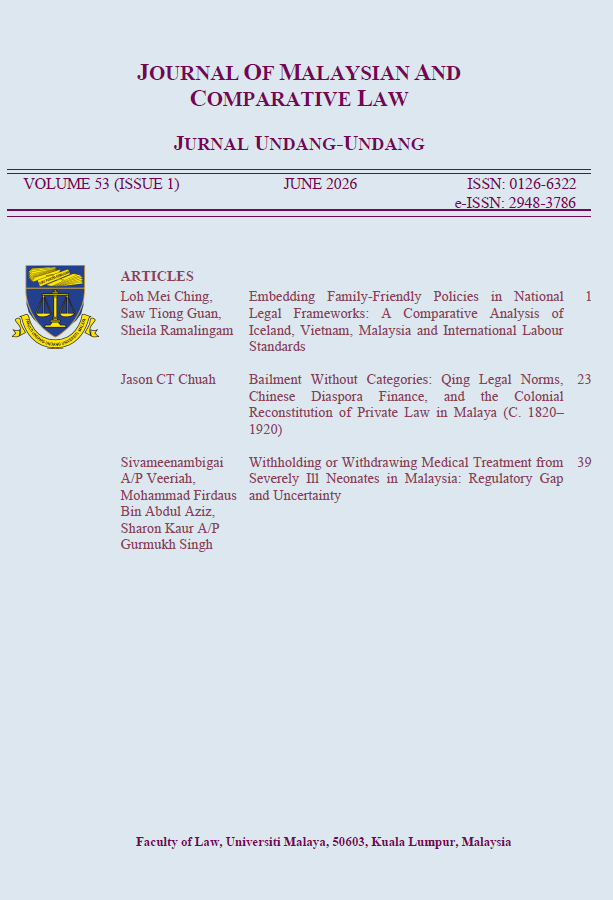
It is with great pleasure that we present the first issue of the Journal of Malaysian and Comparative Law (JMCL) for 2026. This issue brings together three thought-provoking articles that demonstrate the enduring value of comparative legal scholarship in addressing contemporary legal challenges. Although spanning diverse areas of law—labour law, legal history and private law, and medical law and ethics—the contributions share a common objective: to critically examine the adequacy of legal frameworks in responding to evolving social, economic, and moral realities. Collectively, they illustrate how comparative legal analysis can illuminate pathways for legal reform while deepening our understanding of the historical, cultural, and institutional foundations of law.
The opening article, "Embedding Family-Friendly Policies in National Legal Frameworks: A Comparative Analysis of Iceland, Vietnam, Malaysia and International Labour Standards", by Loh Mei Ching, Saw Tiong Guan, and Sheila Ramalingam, examines Malaysia's legal framework on family-friendly employment policies against the experiences of Iceland and Vietnam, with reference to the International Labour Organization's Workers with Family Responsibilities Convention 1981 (No. 156) and Maternity Protection Convention 2000 (No. 183). Through a doctrinal and comparative legal methodology, the authors analyse statutory provisions governing leave entitlements, employment protection, non-discrimination, childcare governance, and support for workers with caregiving responsibilities. Their analysis reveals that while Malaysia has made important strides through recent amendments to the Employment Act 1955, significant gaps remain when compared with more integrated models. Iceland's comprehensive framework of shared parental leave, flexible working arrangements, social insurance financing, and universal childcare, together with Vietnam's strong maternity income protection and state-supported childcare, provide valuable comparative perspectives. The article makes a compelling case for a more coherent and integrated legal framework that better supports work–family reconciliation and strengthens women's sustained participation in the Malaysian workforce.
The second contribution, "Bailment Without Categories: Qing Legal Norms, Chinese Diaspora Finance, and the Colonial Reconstitution of Private Law in Malaya (c. 1820–1920)", by Jason C. T. Chuah, offers a fascinating historical exploration of the interaction between Chinese legal traditions and British colonial jurisprudence. Particularly timely considering renewed public interest generated by the recent Southeast Asian film Dear You, which highlights the historical practice of qiaopi (letters of remittance), the article examines how Qing legal norms governing entrusted property shaped commercial relationships within Chinese diaspora communities in Malaya. Rather than organising disputes through abstract legal categories, Qing law evaluated relationships through concepts of trust, misuse, and social order. British colonial courts, however, reconstituted these relationships within the doctrinal categories of English private law, such as debt, bailment, and trust. The article argues that this process fundamentally transformed the normative character of Chinese commercial practices and altered the distributive consequences of legal relationships. More broadly, it challenges assumptions about the universality of private law concepts and offers an important reminder that legal categories are themselves products of historical and cultural traditions.
The third article, "Withholding or Withdrawing Medical Treatment from Severely Ill Neonates in Malaysia: Regulatory Gap and Uncertainty", by Sivameenambigai A/P Veeriah, Mohammad Firdaus Bin Abdul Aziz, and Sharon Kaur A/P Gurmukh Singh, addresses one of the most ethically and legally challenging issues in contemporary medical practice. Medical practitioners are frequently required to make profoundly difficult decisions regarding the withholding or withdrawal of life-sustaining treatment from severely ill neonates, often in circumstances where legal guidance remains uncertain. Drawing upon doctrinal and qualitative research, the authors identify significant regulatory gaps within the Malaysian legal framework. In contrast to jurisdictions such as the United Kingdom and the Netherlands, where legislation, judicial precedents, and clinical guidelines provide clearer guidance, Malaysia continues to rely principally on national clinical guidelines that lack comprehensive legal support. The article critically examines the relevant provisions of the Child Act 2001 and the Penal Code, highlighting the uncertainties surrounding the legality of such medical decisions. The authors advocate legislative reform alongside improvements to clinical practice guidelines to provide greater legal certainty for healthcare professionals while ensuring that decision-making remains ethically and medically sound.
Taken together, the contributions in this issue underscore the importance of law as a dynamic institution that must continually adapt to changing social conditions, historical understandings, and technological and medical developments. Whether examining the reconciliation of work and family responsibilities, the evolution of commercial legal norms across cultures and empires, or the regulation of complex medical decision-making, each article demonstrates the indispensable role of comparative legal scholarship in identifying both the strengths and limitations of existing legal frameworks. By engaging with international experiences and historical perspectives, the authors provide valuable insights that enrich contemporary legal discourse and inform future law reform in Malaysia.
Finally, we are pleased to announce that, beginning with this issue, JMCL has adopted a new article template developed by the Research Journals Management, Universiti Malaya. This initiative forms part of our continuing efforts to enhance the consistency, accessibility, and professional presentation of the Journal while supporting authors through a more streamlined publication process. We hope that this new format will further strengthen the quality and visibility of the scholarship published in JMCL.
We trust that readers will find the articles in this issue both intellectually stimulating and practically relevant, and we thank our authors, reviewers, and editorial team for their invaluable contributions to the continued success of the Journal of Malaysian and Comparative Law.
Associate Prof. Dr. Mohammad Ershadul Karim
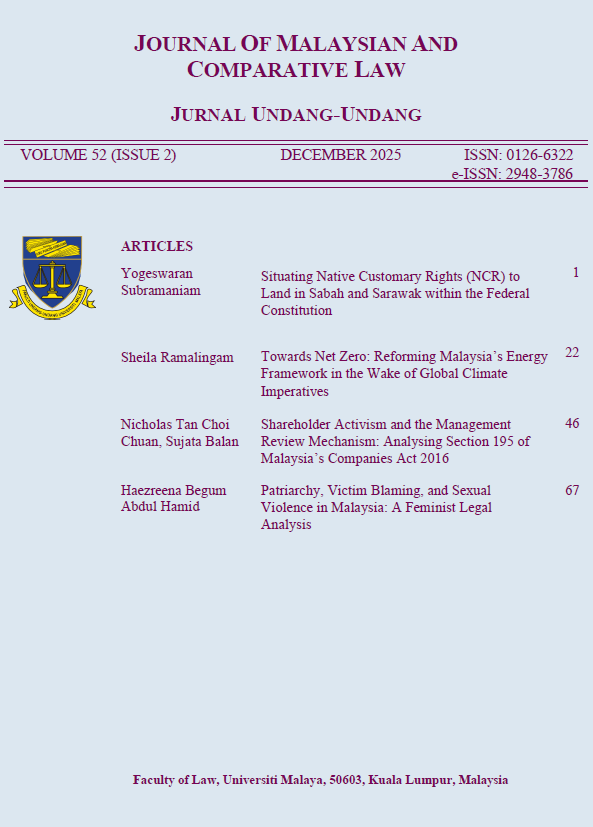
It is our pleasure to present this issue of the Journal of Malaysian and Comparative Law (JMCL), which features four thought-provoking articles that address significant contemporary legal and interdisciplinary issues. Collectively, the contributions reflect the journal's commitment to advancing critical scholarship on constitutional law, environmental governance, corporate regulation, and gender justice. Through doctrinal, comparative, and interdisciplinary analyses, the authors engage with pressing legal challenges confronting Malaysia while offering insights that contribute to broader regional and international discourse.
The first article, "Situating Native Customary Rights (NCR) to Land in Sabah and Sarawak within the Federal Constitution" by Yogeswaran Subramaniam, examines the constitutional recognition and protection of Native Customary Rights (NCR) to land and natural resources in Sabah and Sarawak, where Indigenous peoples constitute the majority population. The article highlights the persistent challenges faced by native communities in securing adequate legal recognition and protection of their customary land rights. It explores the tension between the formal constitutional recognition of NCR and their practical implementation within Malaysia's federal constitutional framework, particularly considering the constitutional safeguards accompanying the formation of the Federation of Malaysia. Beyond constitutional considerations, the author argues that the historical incorporation of English property law concepts into state land legislation has contributed to the legal subordination of native land laws and customs. This argument is further supported by developments such as the 2019 amendment to the Sarawak Land Code 1958, which sought to strengthen the recognition of native customs, and by judicial developments, particularly the Federal Court's decision in the TR Sandah case. The article concludes that, despite the prevailing tendency towards legal centralism, meaningful parity for native land laws and customs remains achievable if State Governments prioritise these matters as a policy imperative.
The second article, "Towards Net Zero: Reforming Malaysia's Energy Framework in the Wake of Global Climate Imperatives" by Sheila Ramalingam, examines Malaysia's transition towards a low-carbon economy within the context of global climate obligations and the evolving national legal and policy framework. The article traces Malaysia's commitments under the Paris Agreement and reviews national energy policies aimed at achieving net-zero emissions by 2050. It assesses the potential contribution of renewable energy sources, including solar, biomass, and hydropower, while critically evaluating the legal and institutional barriers to energy transition, such as fossil fuel subsidies, financing constraints, and governance challenges. Drawing comparative insights from jurisdictions including Germany, Sweden, Finland, and Vietnam, the article demonstrates how policy consistency, carbon pricing mechanisms, and targeted incentives have accelerated renewable energy adoption elsewhere. The analysis argues that Malaysia's energy transition requires stronger governance, innovative financing mechanisms, and inclusive approaches that promote rural electrification and social equity. Ultimately, the author contends that phasing out fossil fuel dependency, strengthening renewable energy legislation, and ensuring meaningful community participation are essential to achieving Malaysia's climate commitments and fostering a resilient, sustainable future.
The third article, "Shareholder Activism and the Management Review Mechanism: Analysing Section 195 of Malaysia's Companies Act 2016" by Nicholas Tan Choi Chuan and Sujata Balan, evaluates the effectiveness of section 195 of the Companies Act 2016 as a mechanism for promoting shareholder activism through management review. Situated within Malaysia's corporate governance framework, the article analyses how section 195 seeks to balance board authority with shareholder participation by enabling shareholders to question, discuss, and make recommendations concerning the management of a company during general meetings. The authors undertake a comparative analysis, particularly with New Zealand's management review framework, to assess the extent to which the provision facilitates meaningful shareholder engagement and corporate accountability. The article concludes that although section 195 has the potential to strengthen shareholder oversight, its practical effectiveness depends upon reforms that enhance its accessibility and operability, particularly for minority and dissenting shareholders.
The final article, "Patriarchy, Victim Blaming, and Sexual Violence in Malaysia: A Feminist Legal Analysis" by Haezreena Begum Abdul Hamid, explores the relationship between patriarchal structures and victim-blaming attitudes in cases of rape and sexual violence. Employing a qualitative discourse analysis through a feminist legal lens, the study examines case law, legislation, academic literature, published reports, and other primary and secondary sources to investigate how women's historical subordination and dependence on men have contributed to the perpetuation of victim blaming. The article demonstrates that patriarchal norms embedded within legal institutions, cultural traditions, religious practices, and broader social structures continue to influence legal and societal responses to sexual violence. Such norms reinforce the scrutiny of women's behaviour and morality while diverting responsibility away from perpetrators, thereby creating significant barriers to justice for survivors. The author argues that patriarchal norms remain a substantial obstacle to achieving fairness and justice in cases of rape and sexual violence and advocates for immediate legal, institutional, and societal reforms that promote gender equality and eliminate victim-blaming attitudes at all levels of society.
Taken together, the articles in this issue underscore the dynamic and evolving nature of legal scholarship in addressing contemporary societal challenges. Whether examining Indigenous land rights, climate governance, corporate accountability, or gender justice, each contribution highlights the importance of law as both a mechanism for regulating society and a vehicle for advancing justice, equality, and sustainable development. We trust that the scholarship presented in this issue will stimulate further academic discussion, inform policy development, and contribute meaningfully to ongoing legal reform in Malaysia and beyond.
Associate Prof. Dr. Mohammad Ershadul Karim
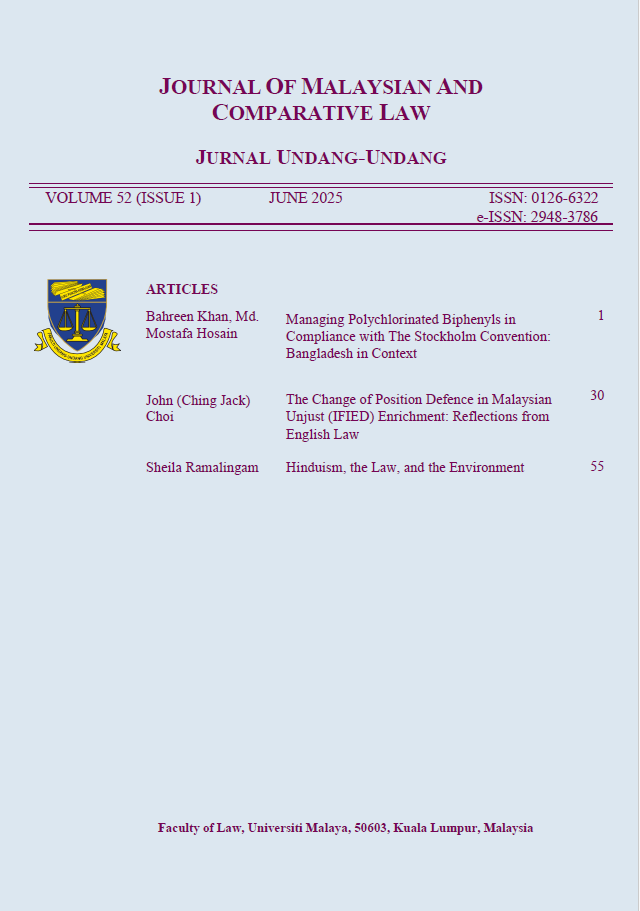
This issue of the JMCL features three articles addressing contemporary legal and interdisciplinary concerns. The first article, “Managing Polychlorinated Biphenyls in Compliance with the Stockholm Convention: Bangladesh in Context,” by Bahreen Khan and Md. Mostafa Hosain, examines the complex economic, social, and environmental challenges posed using hazardous substances (HS), chemicals, and hazardous waste (HW). Drawing on scientific evidence from authoritative sources, the authors reaffirm that the production and excessive use of such substances adversely affect ecosystems, human health, wildlife, and the natural environment. Due to their persistence and toxicity, some chemicals are classified as persistent organic pollutants (POPs), among which polychlorinated biphenyls (PCBs) are particularly significant because of their widespread industrial use, especially in electrical equipment. The article situates these concerns within the framework of the Stockholm Convention, adopted in 2001, and evaluates Bangladesh’s regulatory initiatives as a Party to the Convention. While noting that the import of PCBs has been banned, the authors find that stronger measures are required to meet the Convention’s phase-out deadlines. They emphasise the need to update the National Implementation Plan, strengthen the identification and disposal of PCB waste, particularly in the power sector, and reinforce legal controls to prevent unsafe dumping and environmental release. The article offers recommendations with potential relevance for regulatory reform in Bangladesh and guidance for other developing countries confronting similar challenges.
The second article, “The Change of Position Defence in Malaysian Unjust(ified) Enrichment: Reflections from English Law,” by John Choi, critically analyses the development of unjust or unjustified enrichment in Malaysian law. Although both English and Malaysian legal systems recognise unjust enrichment alongside the defence of change of position, the author observes that the Malaysian apex court decision introducing this cause of action failed to clarify the scope or rationale of the defence, leaving a significant doctrinal gap. The article evaluates the normative place of the change of position defence against four distinctive features of Malaysia’s unjust(ified) enrichment and restitution framework: the coexistence of a statutory restitutionary regime under the Contracts Act 1950 with a nascent common law action; the apparent adoption of a ‘value surviving’ rather than a ‘value received’ test of enrichment; the reception of the civilian-inspired ‘absence of basis’ approach; and the emergence of an under-theorised inquiry into ‘unconscionability’. The author argues that the interaction of these elements exposes unresolved tensions and poses challenges to the doctrinal coherence of unjust enrichment in Malaysia.
The third article, “Hinduism, the Law and the Environment,” by Sheila Ramalingam, explores the relationship between Hinduism, law, and environmental governance. Recognising Hinduism as one of the world’s oldest and most widely practised religions, the author highlights its internally diverse body of beliefs, practices, and philosophical traditions. Through a qualitative analysis of selected religious texts alongside contemporary data on global environmental issues, the article critically assesses claims regarding the relevance of Hindu environmental ethics to modern environmental challenges. While identifying points of convergence between Hindu ethical thought and present-day environmental concerns, the article also questions the limits and practical applicability of translating ancient religious concepts into contemporary legal and policy frameworks. The contribution encourages a more nuanced evaluation of the role religious environmental ethics may play in addressing complex modern ecological crises.
Associate Prof. Dr. Mohammad Ershadul Karim
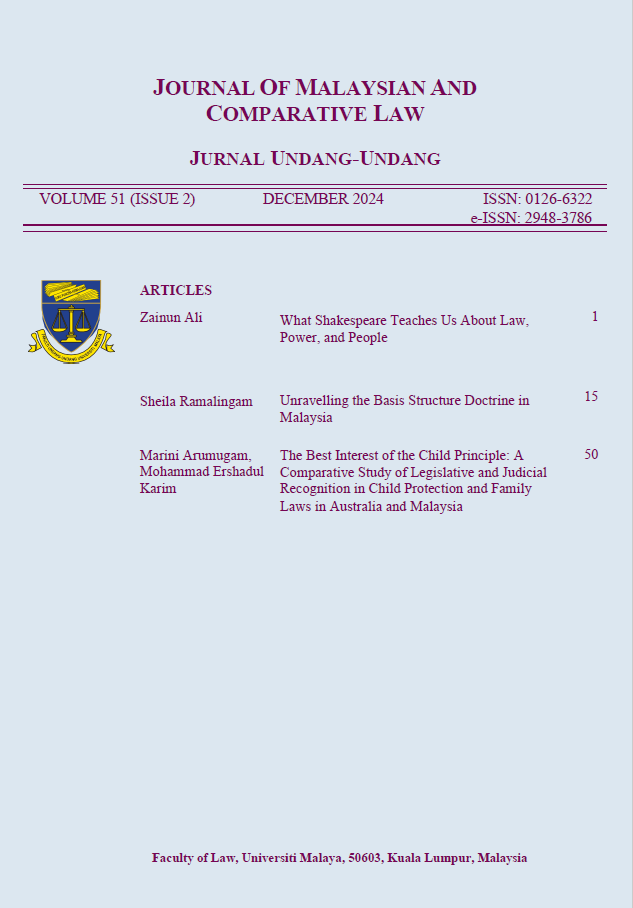
This issue of the JMCL features three articles. In the first article, “What Shakespeare Teaches Us about Law, Power, and People,” the author explores how Shakespeare’s richly layered language and the turbulent political climate of the Tudor–Stuart era reveals an enduring truth: law and power are inseparable, whether used to legitimise authority or dismantle it. Tan Sri Zainun Ali notes that every bid for control, by kings, rebels, armies, or executives, must confront the law, often by suspending or destroying it, with the legal order (including the judiciary) becoming an early target in moments of anarchy or coups. Shakespeare’s portrayal of law shifts according to the power dynamic between monarch and judiciary, reflecting a world where judges lacked true independence yet still drew legitimacy from common law and England’s ancient constitution, an echo of today’s doctrines of separation of powers and the rule of law. The author argues that Shakespeare uses his characters as mirrors, allowing us to confront our own flaws and understand universal themes of justice and power; and while his depictions of ordinary people are raw and sometimes violent, they underscore a crucial lesson: when the law serves only the powerful rather than the people, resentment breeds rebellion and disorder. Ignoring this warning, the author concludes, remains perilous for the modern legal fraternity.
The second article, “Unravelling the Basic Structure Doctrine in Malaysia”, reiterates that a nation’s constitution, its “document of destiny”, defines the structure, limits, and purposes of government, safeguards fundamental rights, and anchors the core values of its society, while remaining a living document capable of adapting to changing needs through amendments. In Malaysia, this adaptability is built into the Federal Constitution, with amendment powers vested in Parliament; yet a profound judicial debate has arisen over the basic structure doctrine, an implied limitation preventing amendments that would undermine the Constitution’s essential framework. In this article, Sheila Ramalingam, explores the meaning and scope of that basic structure within Malaysia’s constitutional order, tracing how the doctrine, though historically influenced by Indian jurisprudence, has evolved into a uniquely Malaysian concept grounded in constitutional supremacy under Article 4, and assessing how the courts have interpreted and localised it in shaping the nation’s constitutional future.
In the third paper, “The Best Interest of the Child Principle: A Comparative Study of Legislative and Judicial Recognition in Child Protection and Family Laws in Australia and Malaysia”, Marini Arumugam and Mohammad Ershadul Karim highlight that the best interest of the child principle has been a key standard in children’s law worldwide since the adoption of the the United Nations Convention on the Rights of the Child, 1989, guiding decisions about a child’s safety, development, and rights. However, in Malaysia, despite being a signatory to this Convention, 1989, this principle is still not fully built into major child protection and non-Muslim family laws, which continue to use the older and narrower “welfare of the child” test and lack clear legal guidelines. This gap is compounded by Malaysia’s plural legal system of civil, Sharia, and customary laws, resulting in inconsistent application and limited protections for children. Using doctrinal and comparative methods, and drawing from Australia’s well-established legislative model with structured guidelines and a child-centred statutory framework, this research finds that Malaysia falls short of Article 3 of the Convention, 1989 obligations and recommends comprehensive reforms to the Child Act 2001, the Law Reform (Marriage and Divorce) Act 1976, and the Guardianship of Infants Act 1961 to embed the best interest of the child as a primary consideration supported by clear, enforceable guidelines.
Associate Prof. Dr. Mohammad Ershadul Karim
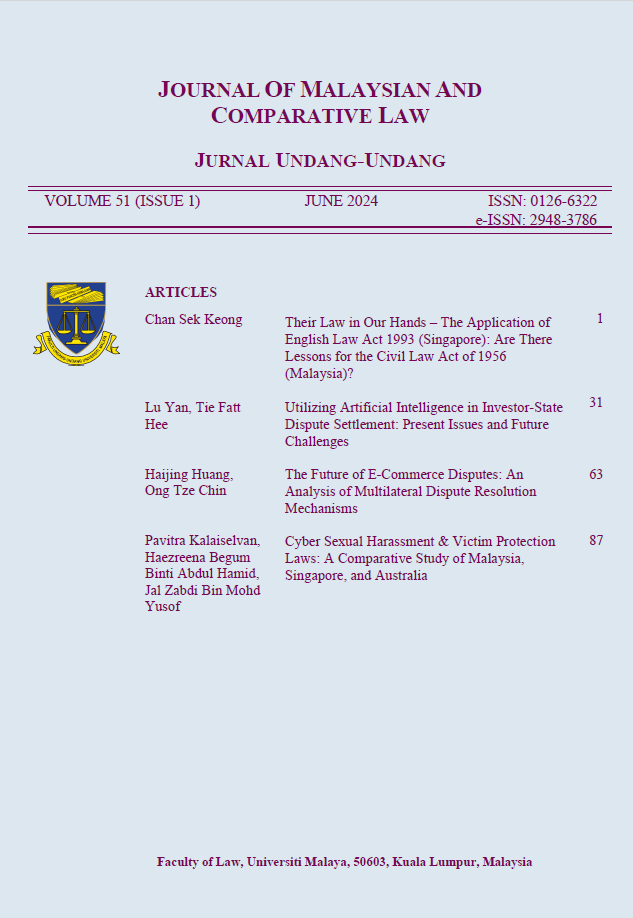
This issue of the JMCL features four articles. In the first article, entitled “Their Law in Our Hands – The Application of English Law Act 1993 (Singapore): Are There Lessons for the Civil Law Act of 1956 (Malaysia)?”, the author explores how English law, once imposed on Penang, Malacca, and Singapore during British colonisation, evolved into the foundation of local legal systems. Justice Keong is convinced that though England lost its territorial empire, it retained a legal empire through the enduring influence of English common law, especially in global finance and trade. In territories lacking unified legal frameworks, English law became essential, and over time, local courts gradually took ownership of it. This culminated in Singapore’s 1994 legal reforms, when it fully broke from Privy Council precedent, signalling the maturation of an independent legal system shaped by national needs and values.
The second article, "Utilizing Artificial Intelligence in Investor-State Dispute Settlement: Present Issues and Future Challenges", considers the integration of Artificial Intelligence (AI) into Investor-State Dispute Settlement, as AI applications have been reshaping the landscape of international arbitration, offering the promise of greater efficiency, objectivity, and analytical precision. The authors also reiterated that though AI has the potential to streamline complex proceedings, enhance evidence evaluation, and support more accurate risk assessments and outcome predictions, this technological advancement also raises critical concerns that warrant careful scrutiny. Issues such as algorithmic bias, ethical dilemmas in automated decision-making, and the risk of diminishing human judgment underscore the need for a cautious and balanced approach. They propose a regulatory framework grounded in transparency, accountability, and periodic algorithmic audits, and argue that AI should serve as a complementary tool, rather than a replacement for human decision-making, particularly in nuanced and sensitive disputes. Additionally, by fostering a collaborative dynamic between human expertise and machine intelligence, they advocate for a future in which AI enhances, rather than undermines, the fairness and integrity of investor-state arbitration.
The third paper, “The Future of E-Commerce Disputes: An Analysis of Multilateral Dispute Resolution Mechanisms”, highlights that the rise of globalisation and the rapid expansion of e-commerce have intensified the need for effective dispute resolution mechanisms within multilateral trade agreements. The paper has attempted to make a comparative qualitative analysis of the dispute settlement systems in the World Trade Organization, the Association of Southeast Asian Nations, and the Regional Comprehensive Economic Partnership. It highlights both the regulatory approaches to electronic commerce and the limitations of these frameworks, and examines the legal structures governing e-commerce disputes across the three agreements to identify the most effective model for addressing such issues in the Asian region. The authors found that while these agreements provide a foundational framework for digital trade governance, they fall short in offering comprehensive mechanisms for resolving e-commerce disputes. As Member States grapple with the inadequacy of traditional systems in addressing the unique challenges of digital trade, the adoption of an Online Dispute Resolution mechanism, which emerges as a viable and forward-looking solution, presents a scalable, efficient, and accessible approach, essential for supporting the continued growth and stability of e-commerce in the region.
The fourth paper, “Cyber Sexual Harassment & Victim Protection Laws: A Comparative Study of Malaysia, Singapore, and Australia”, examines the legal framework of cyber sexual harassment in the context of Malaysia, Singapore, and Australia, as this remains a pervasive issue globally due to the borderless nature of the internet. It affects individuals across all genders and age groups, where perpetrators can harass victims remotely and often anonymously, without any physical presence. This paper critically analyses Malaysia’s current sexual harassment laws to identify their shortcomings. To offer insights for legal reform, the study undertakes a comparative analysis of cyber sexual harassment laws in Singapore and Australia.
Associate Prof. Dr. Mohammad Ershadul Karim
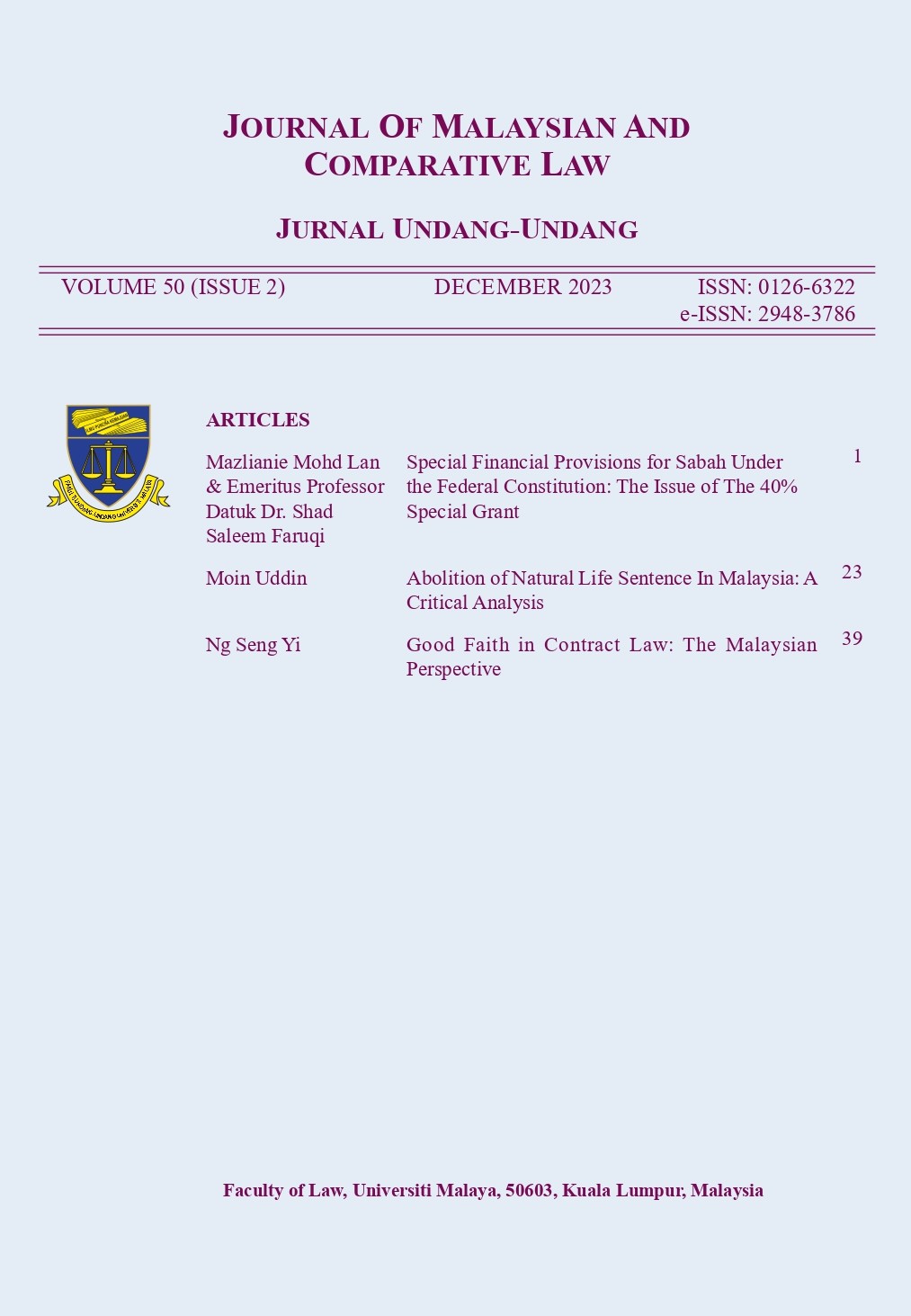
The 2023 edition of the JMCL features three articles. In "Special Financial Provisions for Sabah Under the Federal Constitution: The Issue of The 40% Special Grant", Mazlianie Mohd Lan & Emeritus Professor Datuk Dr. Shad Saleem Faruqi offer a critical analysis of how the Federal Constitution's provisions concerning the exclusive allocation of special revenues or resources to the Borneo States are implemented, with particular emphasis on the two-fifths (40%) Special Grant to Sabah under Article 112C and Part IV of the Tenth Schedule. They emphasize that any disputes regarding the review of this 40% Special Grant or the revenue determination for its calculation must be addressed in strict accordance with the Federal Constitution. Remedies for such disputes may include the appointment of an independent assessor, litigation through public courts, or political negotiations grounded in mutual agreement.
The second paper "Abolition of Natural Life Sentence In Malaysia: A Critical Analysis" examines the justification and implications of imposing natural life imprisonment as an alternative to the death penalty in cases where the death sentence is not mandatory. It contends that natural life imprisonment violates human rights, undermines the dignity and freedom of prisoners, does not serve the public interest, and fails to meet the goals of criminal punishment. In this paper, Moin Uddin calls for the global abolition of natural life sentences and recommends parole as a more humane alternative that preserves human dignity and protects the social and legal rights of inmates.
The third paper "Good Faith in Contract Law: The Malaysian Perspective" aims to enrich current legal scholarship and encourage discourse on the general duty of good faith in contract law. In line with the legal positions in England and Singapore, Ng Seng Yi finds that Malaysian contract law does not recognize a general duty of good faith. Instead, the principle is applied selectively through implied terms in specific contexts. This incremental approach better respects the autonomy and intentions of the contracting parties, maintaining the principle of freedom of contract. However, if parties intend to impose a duty of good faith, they should expressly incorporate such a clause in the contract to prevent uncertainty.
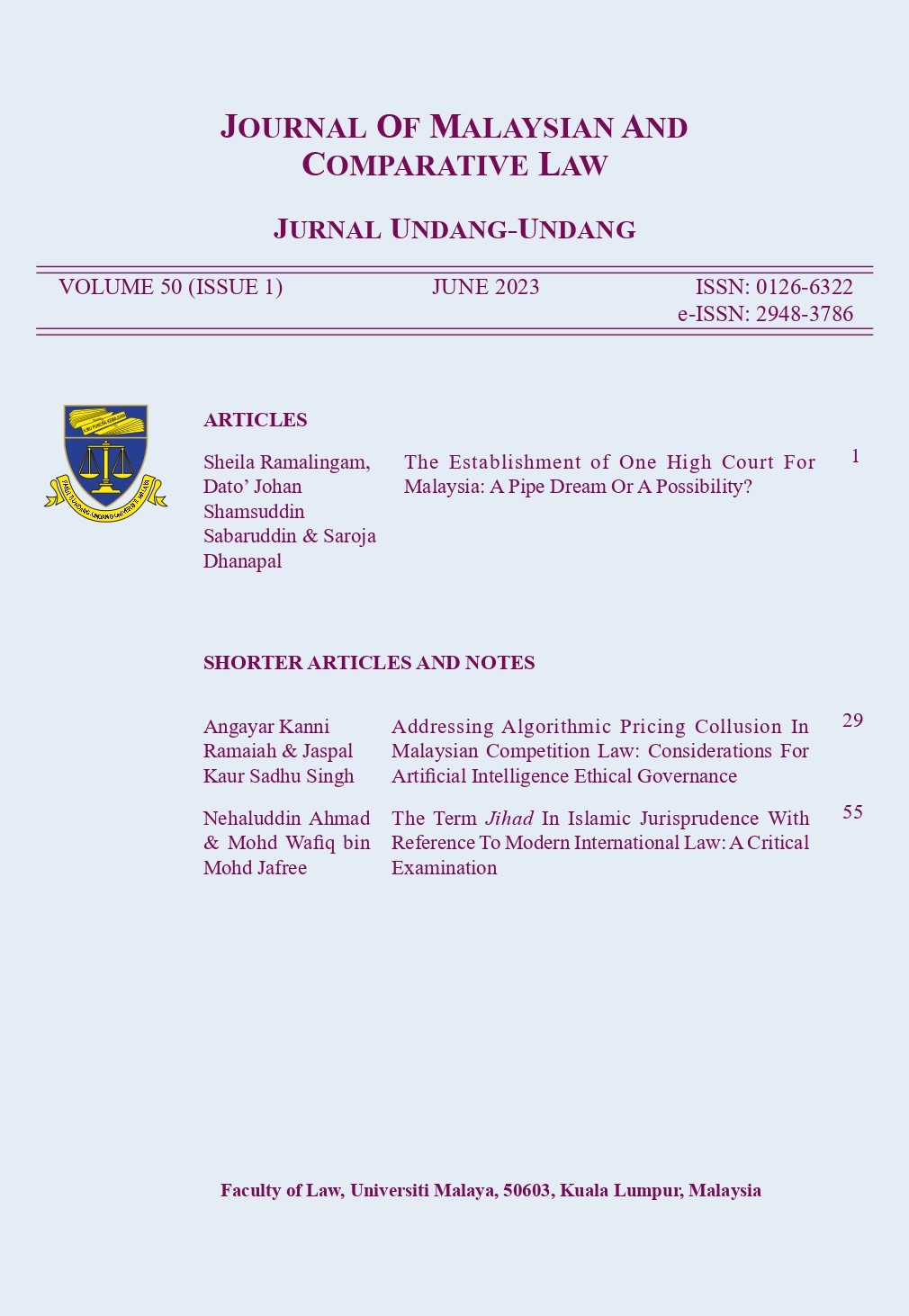
The 2023 edition of the JMCL features three articles. In “The Establishment of One High Court for Malaysia: A Pipe Dream or a Possibility?”, Sheila Ramalingam, Dato’ Johan Shamsuddin Sabaruddin, and Saroja Dhanapal explore the historical roots and current relevance of Malaysia’s dual High Court system, established during its formation in 1963, and question whether a unified High Court could better serve the nation today.
In “Addressing Algorithmic Pricing Collusion in Malaysian Competition Law: Considerations for Artificial Intelligence Ethical Governance”, Angayar Kanni Ramaiah and Jaspal Kaur Sadhu Singh examine how artificial intelligence (AI)- driven pricing in Malaysian digital businesses can lead to tacit collusion, challenging current competitions laws, and call for ethical AI governance to curb anti-competitive pricing.
Nehaluddin Ahmad and Mohd Wafiq bin Mohd Jafree, in “The Term Jihad in Islamic Jurisprudence with Reference to Modern International Law: A Critical Examination” challenge misconceptions about jihad, arguing that it is a defensive concept in Islamic law, and not a tool of aggression, and compare the true meaning of the term with international legal standards. The authors argue that jihad is a cause for self-defence rather than a cause of aggression.
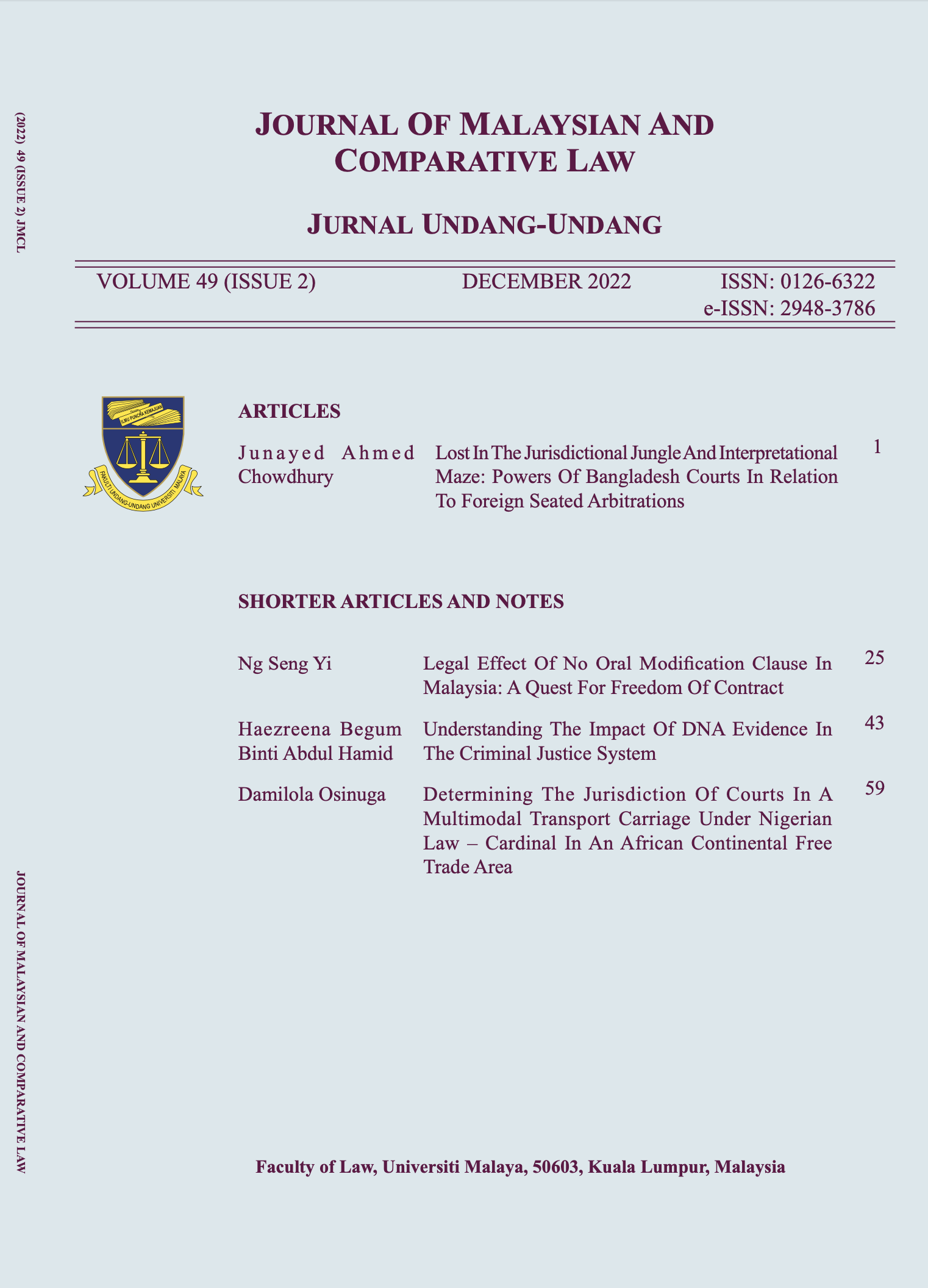
We end the year 2022 with the second issue of Volume 49 of the Journal of Malaysian and Comparative Law (JMCL). We are pleased to announce that starting from the first issue of Volume 49 published in June this year, JMCL is now available fully online via subscription. The previous volumes are fully accessible online without any subscriptions. This is to give JMCL more accessibility and visibility. Most importantly, it is to ensure that our articles reach audiences far and wide so as to impart, spread and share the valuable research and knowledge contributed by our authors.
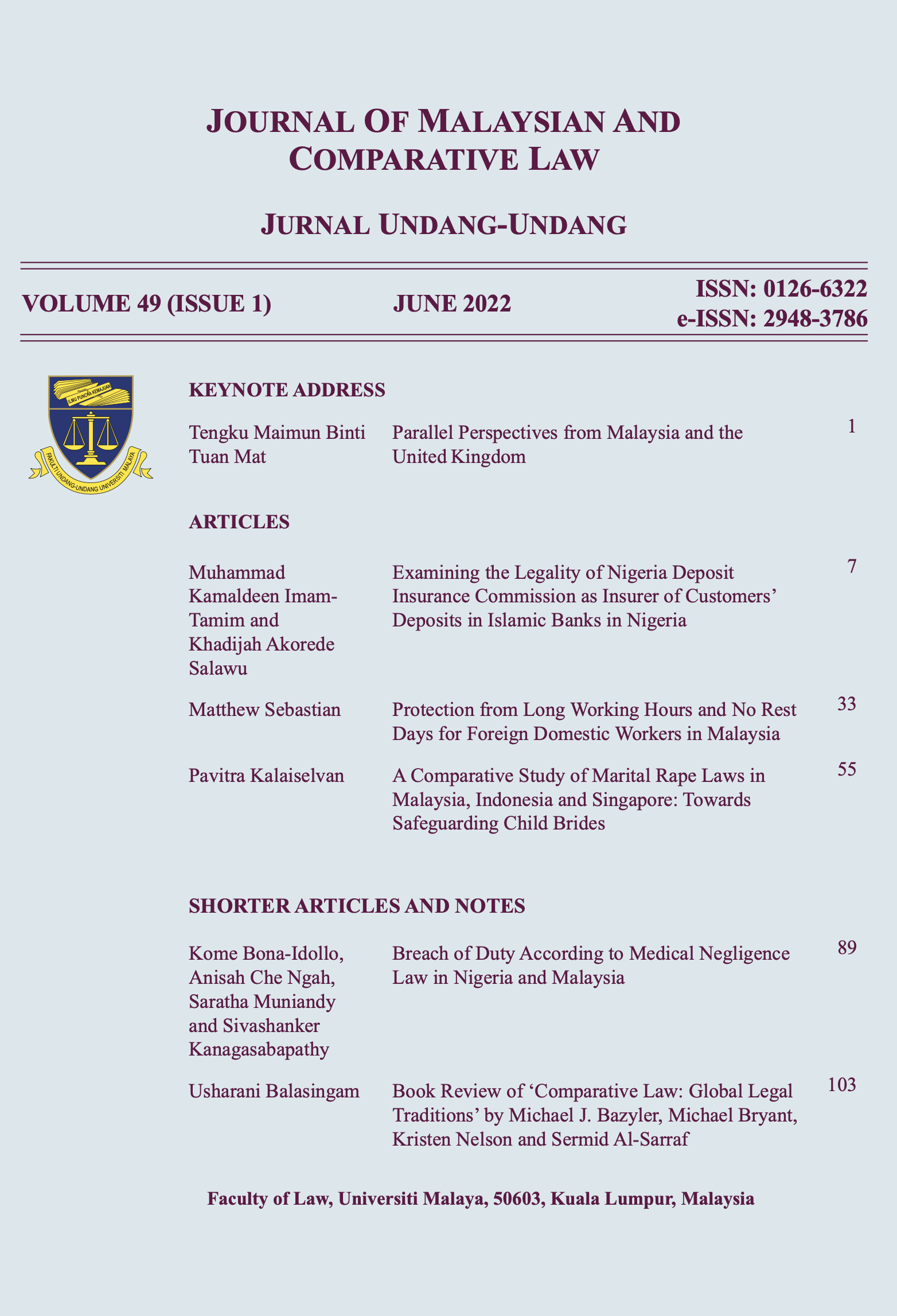
In ‘Breach of Duty According to Medical Negligence Law in Nigeria and Malaysia’, the authors, Kome-Bona Idollo et.al. compared the principles used in Nigeria and Malaysia to determine whether there was a breach of duty, concluding that while Malaysia has applied the Rogers test, Nigeria still applies the Bolam-Bolitho test.
Last but not least, Usharani Balasingam reviews the book ‘Comparative Law: Global Legal Traditions’ by Michael J Bazyler, Michael Bryant, Kristen Nelson & Sermid Al- Sarraf noting that the book serves a useful need not only for law students, but any reader who is seeking to navigate an interconnected, interdependent globe to comprehend global legal traditions and the cultures that shape it.
Dr. Sharifah Suhanah Syed Ahmad
Executive Editor
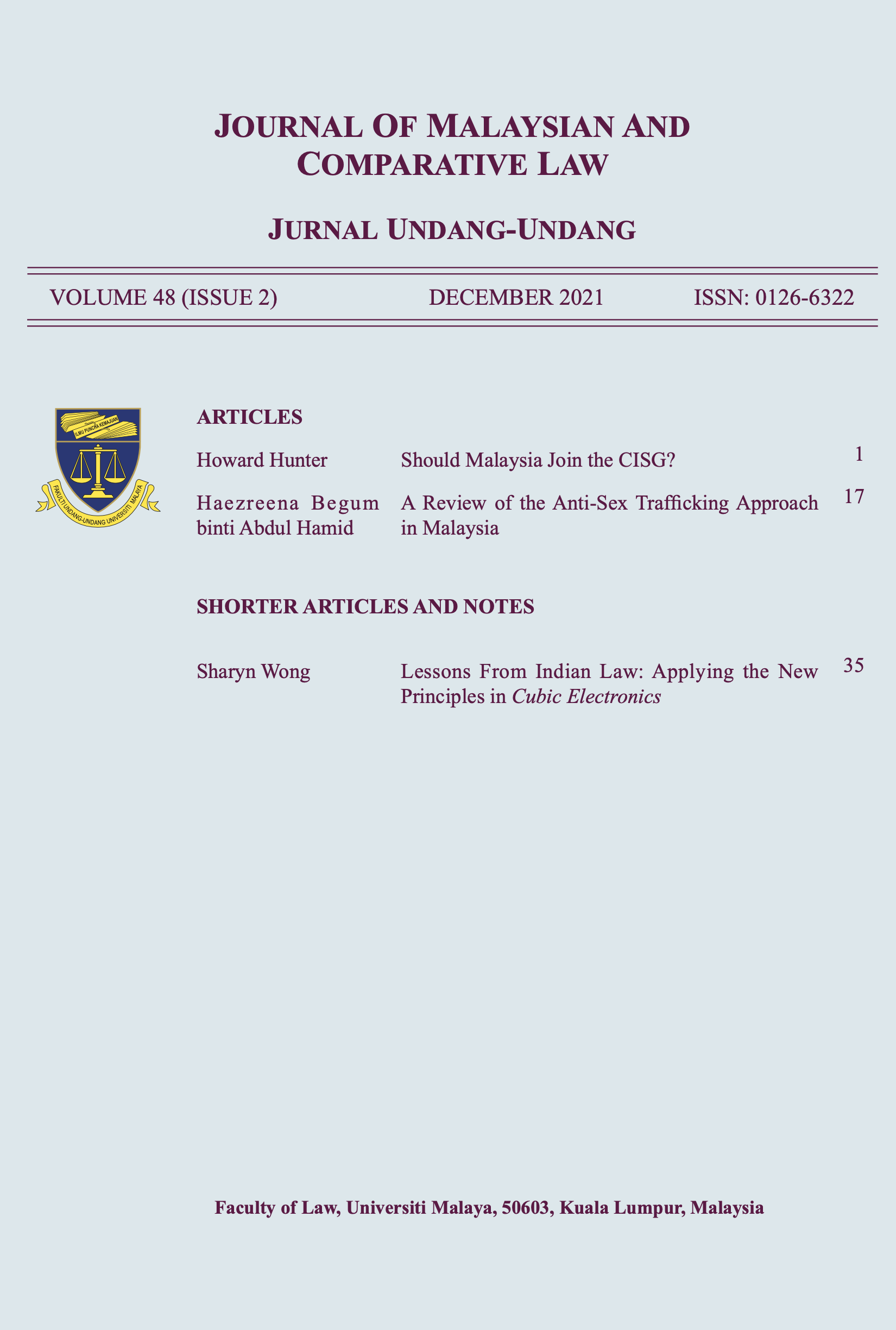
We end the year with three thought provoking articles.
In his piece “Should Malaysia join the CISG (UN Convention on the International
Sale of Goods)”, Howard Hunter advocates for Malaysia acceding to the above UN Convention based primarily on two grounds; first the portions of the CISG which differ from the norms of the common law are relatively few in number and could be easily addressed. Secondly, the CISG is a neutral law that has been adopted and regularly used by both civil and common law states. Haezreena Begum Abdul Hamid’s article “A Review of the Anti Sex-Trafficking Approach in Malaysia” analyses the issues and problems surrounding sex trafficking involving migrant women in Malaysia. The author argues for the better protection of such women, and proposes, among others, for the amendment of the definition of “trafficking” to clarify any ambiguities and for the decriminalisation of sex work.
Last but not least, Sharyn Wong on her case note on the Federal Court judgment in Cubic Electronics Sdn Bhd (in liquidation) v Mars Telecommunications Sdn Bhd, proposes that Malaysian law on liquidated damages clauses (LAD) could be further improved by adopting the Indian position of requiring actual proof of loss whenever possible in order to prove an innocent party’s legitimate interest.
Dr. Sharifah Suhanah Syed Ahmad
Executive Editor
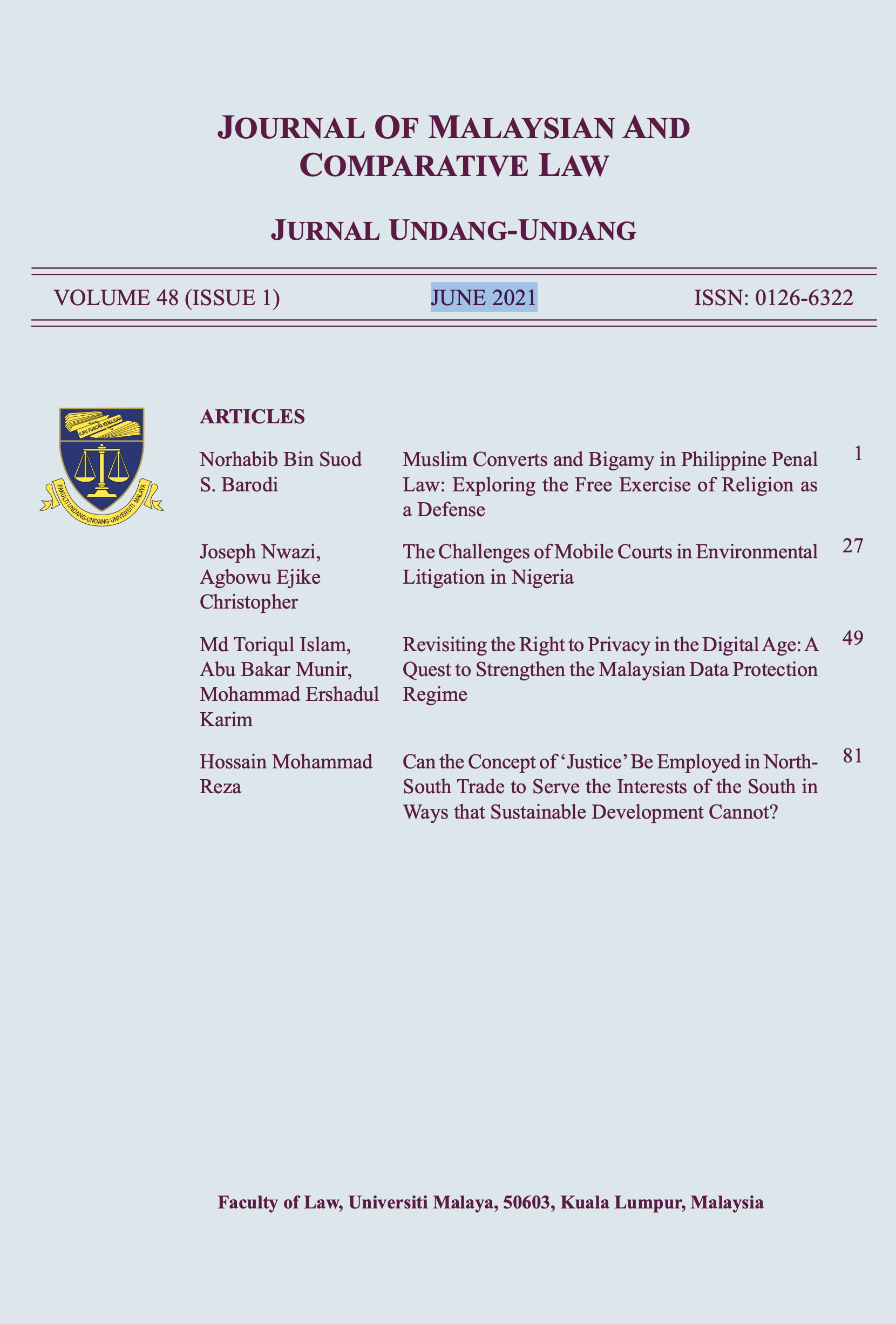
Our June 2021 edition of the JMCL features a diverse selection of scholarly and stimulating articles. In “Muslim Converts and Bigamy in Philippine Penal Law: Exploring the Free Exercise of Religion as a Defense”, Norhabib bin Suod S. Barodi analyses whether the defence of free exercise of religion under the Philippine Constitution can be used against a charge of bigamy when a Muslim convert marries again after his conversion while his civil marriage is still subsisting. The author draws upon the Philippine Supreme Court decision of Estrada v Escritor to show how this might be possible.
In “The Challenges of Mobile Courts in Environmental Litigation in Nigeria”, Joseph Nwazi and Agbowu Ejike Christopher discuss the important role which mobile courts play in improving access to environmental justice in Nigeria. The authors draw attention to the challenges faced by these courts, such as limited jurisdiction and lack of security.
In “Revisiting the Right to Privacy in the Digital Age: A Quest to Strengthen the Malaysian Data Protection Regime”, Md Toriqul Islam and others conduct an in-depth analysis of the current data protection regime in Malaysia. The authors conclude that the Malaysian Personal Data Protection Act 2010 (PDPA) has many shortcomings and needs to be amended in order to strengthen it to be in line with international data protection standards, especially the General Data Protection Regulation (GDPR).
Last but not least, Hossain Mohammad Reza examines how trade, environment and sustainable development has impinged on aspirations of the global South. His piece, “Can the Concept of ‘Justice’ be Employed in North-South Trade to Serve the Interests of the South in Ways that Sustainable Development Cannot”, highlights how both GATT Articles XX(b) and (g) and the Agreement on the Application of Sanitary and Phytosanitary Measures have created avenues for imposing non-tariff barriers which has led to discrimination against the South. The author argues for the incorporation of distributive, procedural and corrective justice in the global trade regime as a pertinent solution.
Dr. Sharifah Suhanah Syed Ahmad
Executive Editor
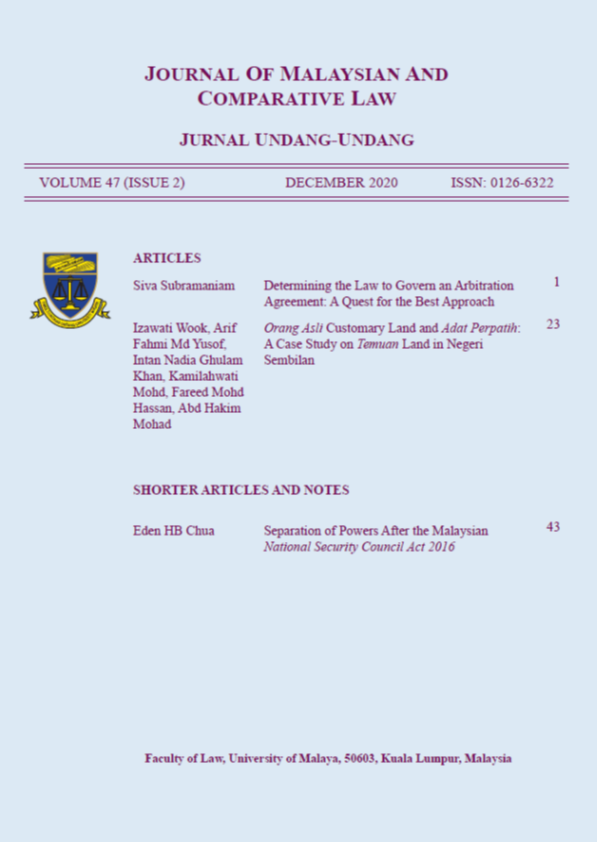
The December 2020 edition kicks off with the piece by Siva Subramaniam entitled, ‘Determining the Law to Govern an Arbitration Agreement: A Quest for the Best Approach’. In this article, the author analyses the complexities surrounding the determination of the parties’ choice of law in relation to an international commercial arbitration. This is especially so because the arbitration agreement is separate from the main contract, and the arbitration agreement could be governed either by the law of the underlying contract or the law of the seat of the arbitration.
In ‘Orang Asli Customary Land and Adat Perpatih: A Case Study on Temuan Land in Negeri Sembilan’, Izawati Wook and others delve into the customs and customary law of the Temuan community in Negeri Sembilan. The authors adopt a qualitative approach through interviews and focus group discussions to investigate the concept, meaning and perspectives of customary land among the Orang Asli in several selected villages in Negeri Sembilan.
Last but not least, Eden HB Chua analyses the Federal Court decision in Datuk Seri Anwar Ibrahim v Government of Malaysia [2020] 3 CLJ 593, focusing on the Federal Court’s refusal to rule against the constitutionality of the National Security Council Act 2016.
Dr. Sharifah Suhanah Syed Ahmad
Executive Editor
The Journal of Malaysian and Comparative Law (JMCL) is a refereed journal published annually by the Faculty of Law of the University of Malaya. It began publication in 1974 with two issues a year, in June and in December. The JMCL accepts and publishes contributions from scholars all over the world. Its articles, in English reflect its dual character as a Malaysian and comparative law journal. Its subject matter and contents, wide-ranging in character, reflect a bias towards Malaysian and Asian laws
The Journal of Malaysian and Comparative Law (JMCL) is a refereed journal published annually by the Faculty of Law of the University of Malaya. It began publication in 1974 with two issues a year, in June and in December. The JMCL accepts and publishes contributions from scholars all over the world. Its articles, in English reflect its dual character as a Malaysian and comparative law journal. Its subject matter and contents, wide-ranging in character, reflect a bias towards Malaysian and Asian laws.
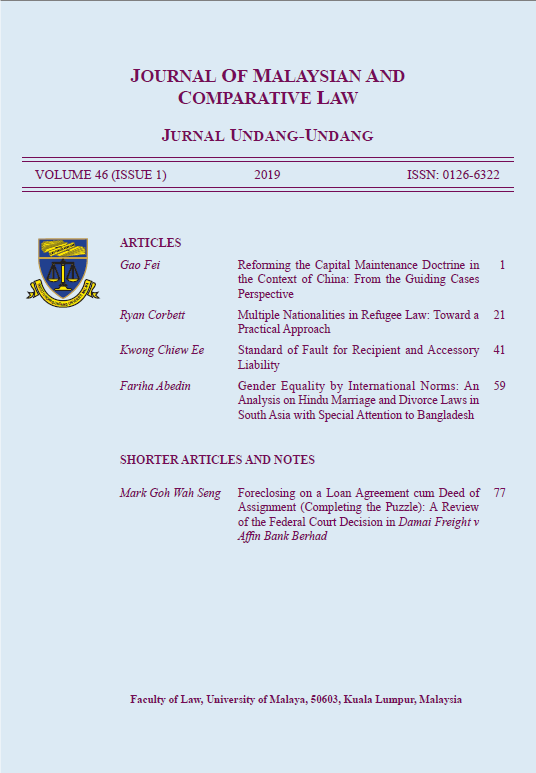
The Journal of Malaysian and Comparative Law (JMCL) is a refereed journal published annually by the Faculty of Law of the University of Malaya. It began publication in 1974 with two issues a year, in June and in December. The JMCL accepts and publishes contributions from scholars all over the world. Its articles, in English reflect its dual character as a Malaysian and comparative law journal. Its subject matter and contents, wide-ranging in character, reflect a bias towards Malaysian and Asian laws.
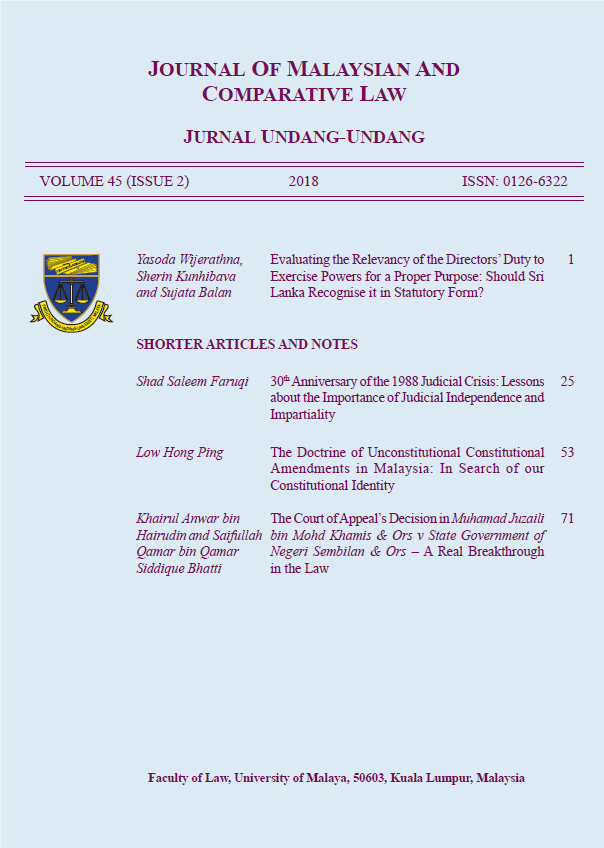
The Journal of Malaysian and Comparative Law (JMCL) is a refereed journal published annually by the Faculty of Law of the University of Malaya. It began publication in 1974 with two issues a year, in June and in December. The JMCL accepts and publishes contributions from scholars all over the world. Its articles, in English reflect its dual character as a Malaysian and comparative law journal. Its subject matter and contents, wide-ranging in character, reflect a bias towards Malaysian and Asian laws.
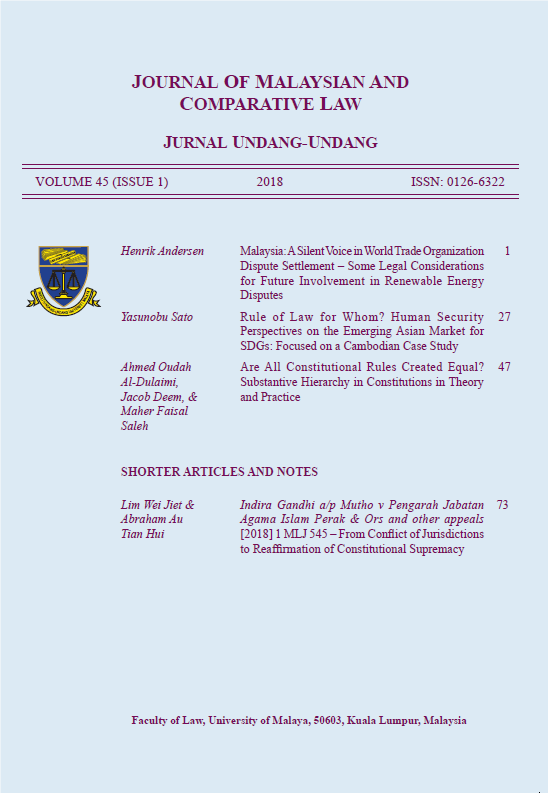
The Journal of Malaysian and Comparative Law (JMCL) is a refereed journal published annually by the Faculty of Law of the University of Malaya. It began publication in 1974 with two issues a year, in June and in December. The JMCL accepts and publishes contributions from scholars all over the world. Its articles, in English reflect its dual character as a Malaysian and comparative law journal. Its subject matter and contents, wide-ranging in character, reflect a bias towards Malaysian and Asian laws.
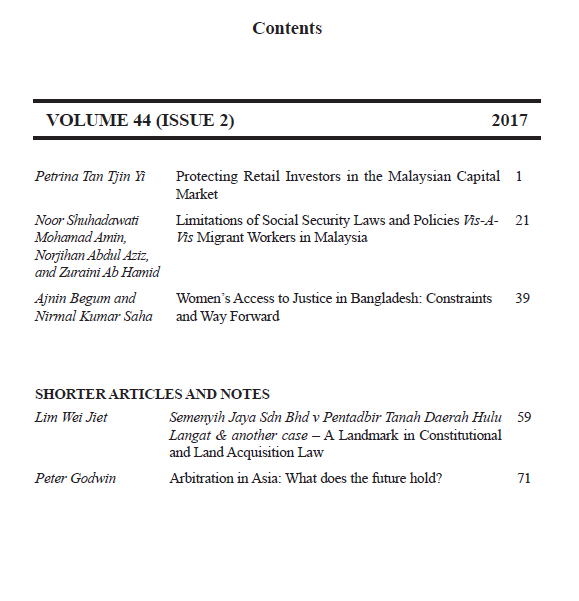
The Journal of Malaysian and Comparative Law (JMCL) is a refereed journal published annually by the Faculty of Law of the University of Malaya. It began publication in 1974 with two issues a year, in June and in December. The JMCL accepts and publishes contributions from scholars all over the world. Its articles, in English reflect its dual character as a Malaysian and comparative law journal. Its subject matter and contents, wide-ranging in character, reflect a bias towards Malaysian and Asian laws.
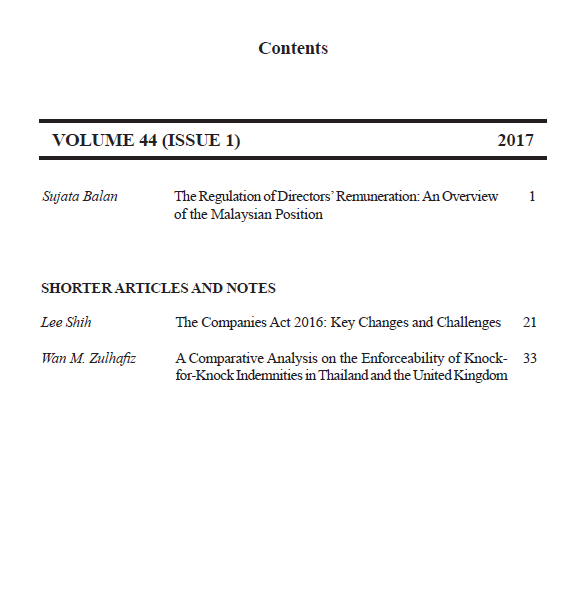
The Journal of Malaysian and Comparative Law (JMCL) is a refereed journal published annually by the Faculty of Law of the University of Malaya. It began publication in 1974 with two issues a year, in June and in December. The JMCL accepts and publishes contributions from scholars all over the world. Its articles, in English reflect its dual character as a Malaysian and comparative law journal. Its subject matter and contents, wide-ranging in character, reflect a bias towards Malaysian and Asian laws.
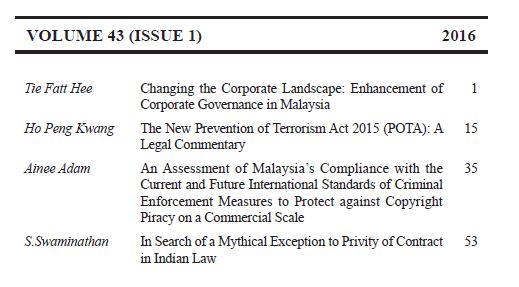
The Journal of Malaysian and Comparative Law (JMCL) is a refereed journal published annually by the Faculty of Law of the University of Malaya. It began publication in 1974 with two issues a year, in June and in December. The JMCL accepts and publishes contributions from scholars all over the world. Its articles, in English reflect its dual character as a Malaysian and comparative law journal. Its subject matter and contents, wide-ranging in character, reflect a bias towards Malaysian and Asian laws.
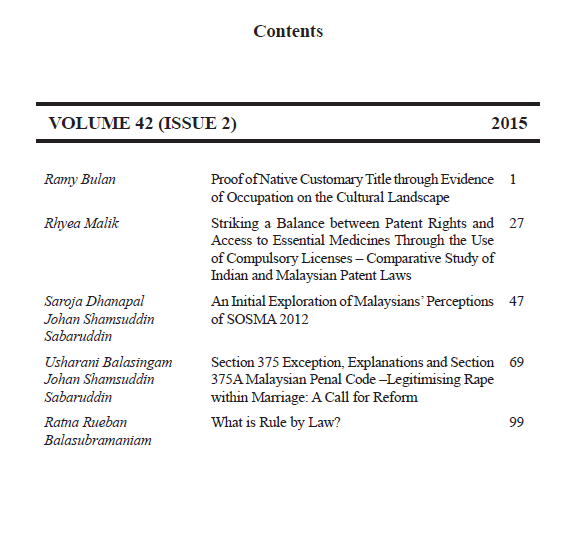
The Journal of Malaysian and Comparative Law (JMCL) is a refereed journal published annually by the Faculty of Law of the University of Malaya. It began publication in 1974 with two issues a year, in June and in December. The JMCL accepts and publishes contributions from scholars all over the world. Its articles, in English reflect its dual character as a Malaysian and comparative law journal. Its subject matter and contents, wide-ranging in character, reflect a bias towards Malaysian and Asian laws.
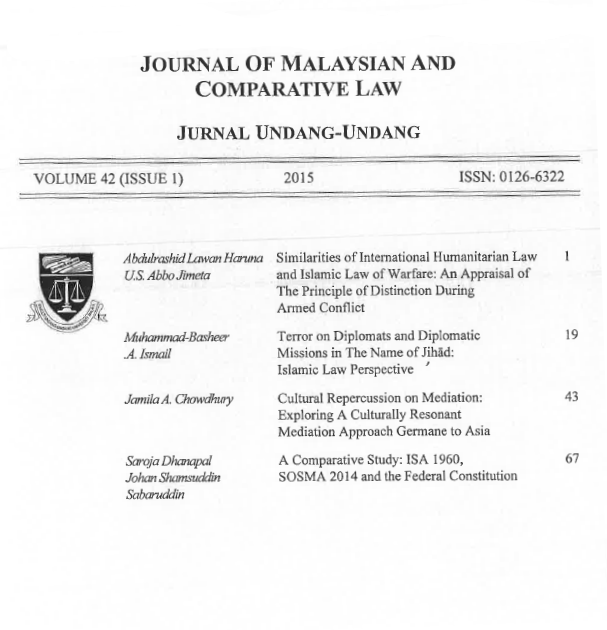
The Journal of Malaysian and Comparative Law (JMCL) is a refereed journal published annually by the Faculty of Law of the University of Malaya. It began publication in 1974 with two issues a year, in June and in December. The JMCL accepts and publishes contributions from scholars all over the world. Its articles, in English reflect its dual character as a Malaysian and comparative law journal. Its subject matter and contents, wide-ranging in character, reflect a bias towards Malaysian and Asian laws.
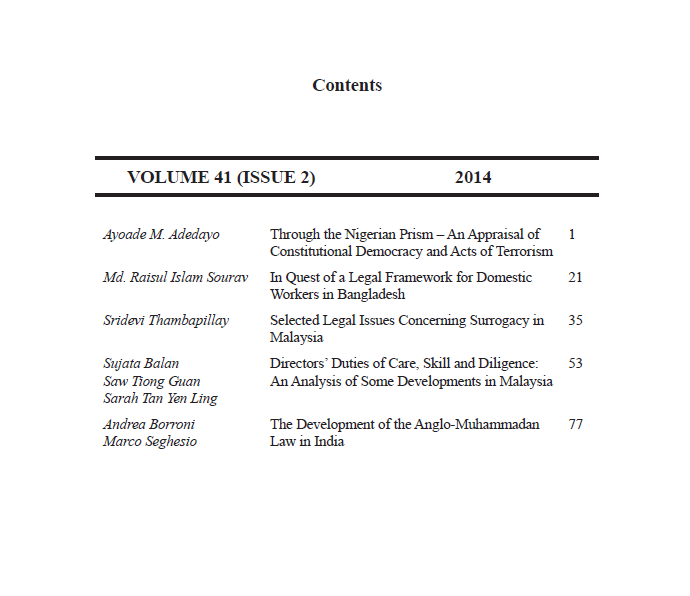
The Journal of Malaysian and Comparative Law (JMCL) is a refereed journal published annually by the Faculty of Law of the University of Malaya. It began publication in 1974 with two issues a year, in June and in December. The JMCL accepts and publishes contributions from scholars all over the world. Its articles, in English reflect its dual character as a Malaysian and comparative law journal. Its subject matter and contents, wide-ranging in character, reflect a bias towards Malaysian and Asian laws.
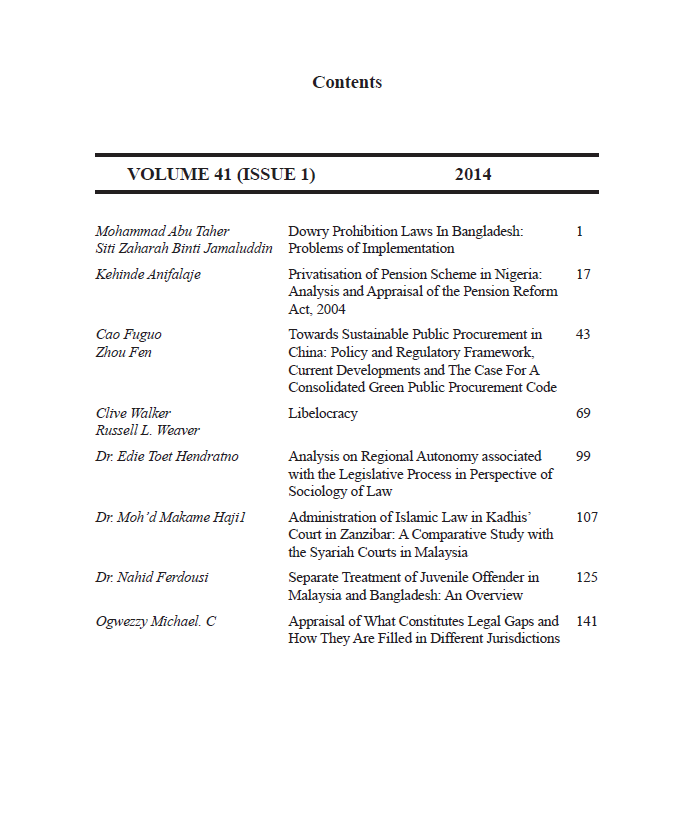
The Journal of Malaysian and Comparative Law (JMCL) is a refereed journal published annually by the Faculty of Law of the University of Malaya. It began publication in 1974 with two issues a year, in June and in December. The JMCL accepts and publishes contributions from scholars all over the world. Its articles, in English reflect its dual character as a Malaysian and comparative law journal. Its subject matter and contents, wide-ranging in character, reflect a bias towards Malaysian and Asian laws.
NAVIGATION
Artificial Intelligence Policy
Ethics and Malpractice Statements
MEMBER OF
SUPPORTED SOCIETIES
SUPPORTED CONFERENCE
VISITORS