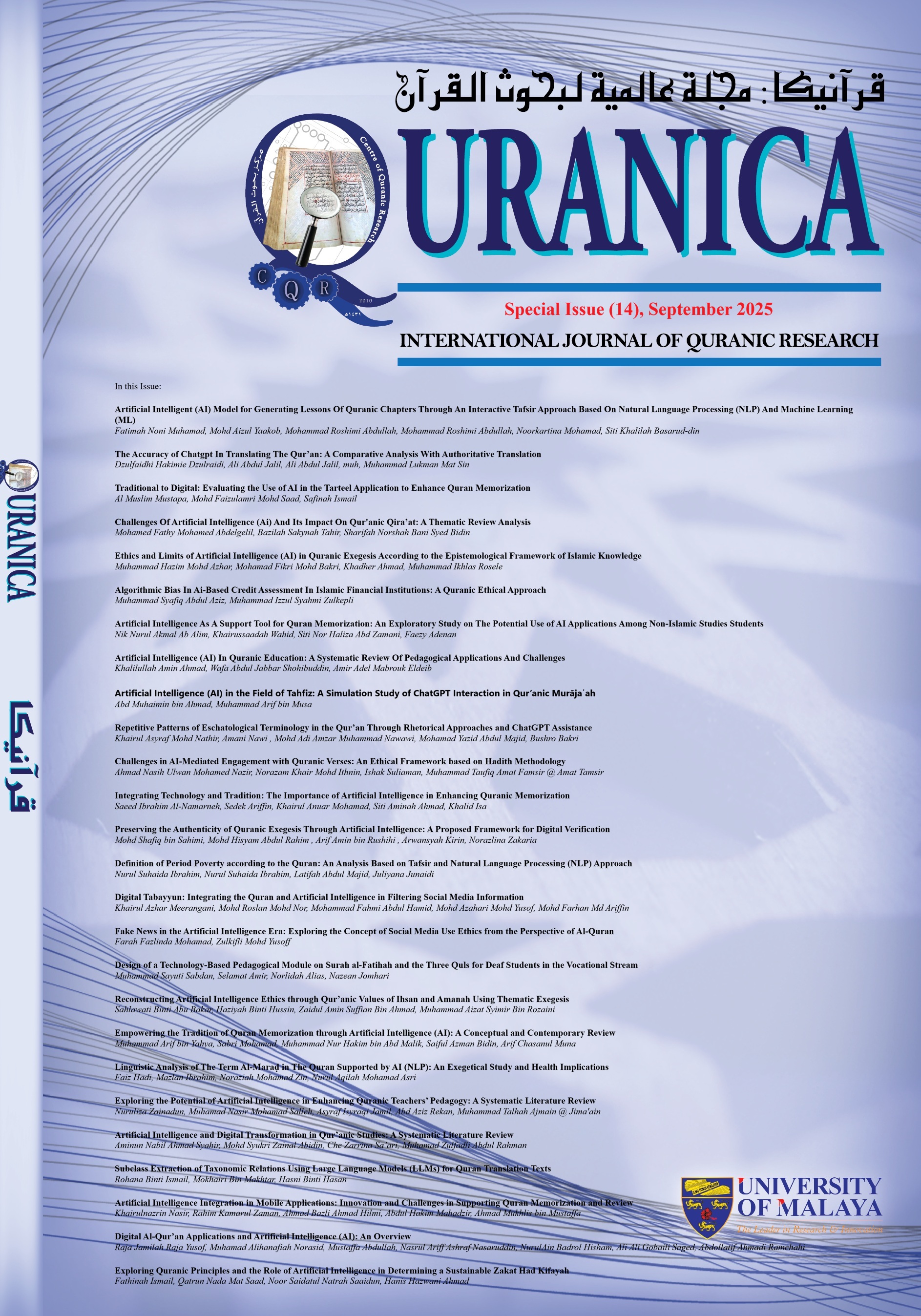
Linguistic Analysis of The Term Al-Maraḍ in The Quran Supported By AI(NLP): An Exegetical Study and Health Implications
DOI:
https://doi.org/10.22452/quranica.vol17no2.20Keywords:
al-Maraḍ, Quranic Exegesis, Artificial Intelligence (AI), Linguistic Analysis, Islamic Holistic HealthAbstract
This study analyses the term al-maraḍ in the Quran from a linguistic perspective with the support of artificial intelligence (AI), specifically generative language models based on natural language processing (NLP). The aim is to explore the linguistic and semantic structure of the term, assess the interpretive alignment between AI output and classical tafsir, and identify its implications for understanding health in Islam. This qualitative research utilises references from classical tafsir works, scholarly journals, and AI assistance (ChatGPT) to identify the term's occurrences, syntactic patterns, and contextual meanings in the Quran. The findings are organised into three main sections: (i) Distributional Analysis and Morphological Forms of the Term al-Maraḍ in the Qur'an; (ii) Semantic and Linguistic Structure Analysis of al-maraḍ in the Quran, focusing on its forms and usage across contexts; (iii) Interpretive Alignment between Generative AI and Classical Tafsir, evaluating the accuracy of AI-generated meanings against authoritative exegesis and (iv) Implications of Linguistic Analysis for Holistic Health and Digital Tafsir, demonstrating the potential integration of technology and exegetical knowledge in supporting a comprehensive Quranic health concept. This study shows that AI can serve as an effective linguistic tool when thoughtfully integrated with the discipline of traditional tafsir. The originality of this research lies in its AI-assisted qualitative approach for developing an ethical, tradition-grounded framework for digital tafsir.
Downloads
Published
Issue
Section
License
Disclaimer
QURANICA makes every effort to ensure the accuracy of all its contents. However, opinions, discussions, views and recommendations are expressed in this journal do not necessarily reflect the official policy of QURANICA or views of its editors or publishers. Therefore, QURANICA and its publishers will not be liable for any controversy may be arisen. The journal reserves the right, at its sole discretion, to change its terms and conditions of publications.
Copyright
It is a condition of publication that manuscript submitted to the journal have not been published, accepted for publication, nor simultaneously submitted for publication elsewhere. By submitting a manuscript, the author(s) agrees that copyright for the article is transferred to the publisher, if and when the manuscript is accepted for publication.